Wellbeing Research Launch
Vast majority of teachers in Northern Ireland are experiencing work-related burnout, according to DCU research
Almost half likely to leave the profession as a result of work-related pressures
Nine in ten teachers (91%) in Northern Ireland are experiencing moderate to high levels of work-related burnout, according to new research from the Centre for Collaborative Research Across Teacher Education at Dublin City University in collaboration with St Mary’s University College in Belfast.
The research, involving a survey of over 600 teachers across Northern Ireland, found that 95% of respondents indicated workload as a contributor to burnout; some 59% cited unrealistic parental expectations as a contributor to burnout; while nearly half (46%) cited challenges working with pupils with special educational needs as a contributing factor to burnout.
Worryingly, some 46% of respondents indicated they are likely to leave the profession as a response to burnout.
The findings are in line with those from an earlier survey of teachers in the Republic of Ireland which similarly found 42% of teachers in the Republic of Ireland were likely to leave the profession as a result of burnout. That survey found 85% of teachers in the Republic of Ireland are experiencing moderate to high-levels of burnout.
The latest research was carried out by Professor Catherine Furlong, Dr Pia O’Farrell, and Dr Sabrina Fitzsimons of DCU’s Create research centre, supported by Mr Paul Hazzard of St Mary’s University, Belfast.
Speaking about the findings, Dr Sabrina Fitzsimons, from DCU’s Centre research centre said, ‘This study is a reminder that teacher burnout cannot be addressed through temporary measures or initiatives focused solely on enhancing teacher resilience in the face of ongoing stressors.
‘It demands Cathedral Thinking. That is, the ambition to deliver meaningful systemic change and rebuild the conditions of teaching for the long term, so that teachers are supported not only to stay in the profession, but to flourish and continue doing the profoundly important work of education. That work must begin by really listening to teachers.
‘The findings are similar to those which emerged from a similar survey of teachers in the Republic of Ireland which also indicated significant workload concerns. Teachers are the backbone of our schools across the island of Ireland, without which our schools simply would not function. We need to see them supported.’
Paul Hazzard, Associate Lecturer, St Mary’s University College, Belfast said, ‘excellence in the classroom begins with the teacher. When we protect the wellbeing of the teacher, we protect the quality of our children’s future. If we are serious about the future of education, we must be serious about protecting the wellbeing of teachers. Supporting teachers is an urgent moral responsibility. Simply, there is no route to educational excellence without teacher wellbeing”
Teachers participating in the study were also asked to record their self-rated mental health over the past year. Some 32% of respondents rated their mental health as poor or very poor. Some 16% of teachers who reported poor/very poor mental health also feel that this has negatively influenced their ability to engage in teaching and learning with pupils.
The World Health Organisation (WHO) recognises burnout as an occupation-related phenomenon caused by prolonged and unmanaged workplace stress. According to the WHO, it has three key features: emotional exhaustion, depersonalisation and reduced personal accomplishment. Burnout has significant implications for the education sector, which is already grappling with attracting people into the profession and, thereafter, retaining them.
This ongoing research on Educator Occupational Wellbeing across the island of Ireland aims to improve wellbeing and retention, by identifying significant causal factors of burnout and poor mental health in teachers and school principals. To date, over 2,500 educators have participated in the research, making it the largest study of its kind on the island of Ireland.
An executive report from this study in Northern Ireland will be launched later this year.
The survey had over 600 responses from primary and post-primary teachers in Northern Ireland, and was undertaken from November 2025 to January 2026.
The study uses the Copenhagen Burnout Inventory (CBI) which is a valid and reliable tool for the measurement of emotional exhaustion (one of the key features of burnout according to the WHO). The inventory is used in research and clinical settings to assess levels of burnout. The CBI inventory has three sub-dimensions – personal burnout, work related burnout and student or client related burnout (depending on the work context). Personal burnout is best considered as an indicator of ‘general’ burnout a person may be experiencing. Work-related burnout is directly attributed to emotional exhaustion as a result of a person’s occupation. The respondent is asked 19 questions that are rated on a 5 point scale (0-100). An overall mean score falling in the 0-49 bracket indicates mild burnout – this demonstrates a movement out of the optimal range of occupational stress and into the lower range of prolonged emotional exhaustion. Scores of 50-74 reflect moderate burnout – which is already serious and often under-recognised as burnout is covert, with cumulative effects on wellbeing and functioning. A score of 75 or above indicates high burnout, indicating severe emotional exhaustion. At this level the risk of physical and mental health deterioration increases sharply, often leading to occupational withdrawal, long-term absence or exiting the professional field due to ill health. This underscores the need to identify and address burnout in its early stages.
Download: DUC Teacher Occupational Wellbeing Research 2026
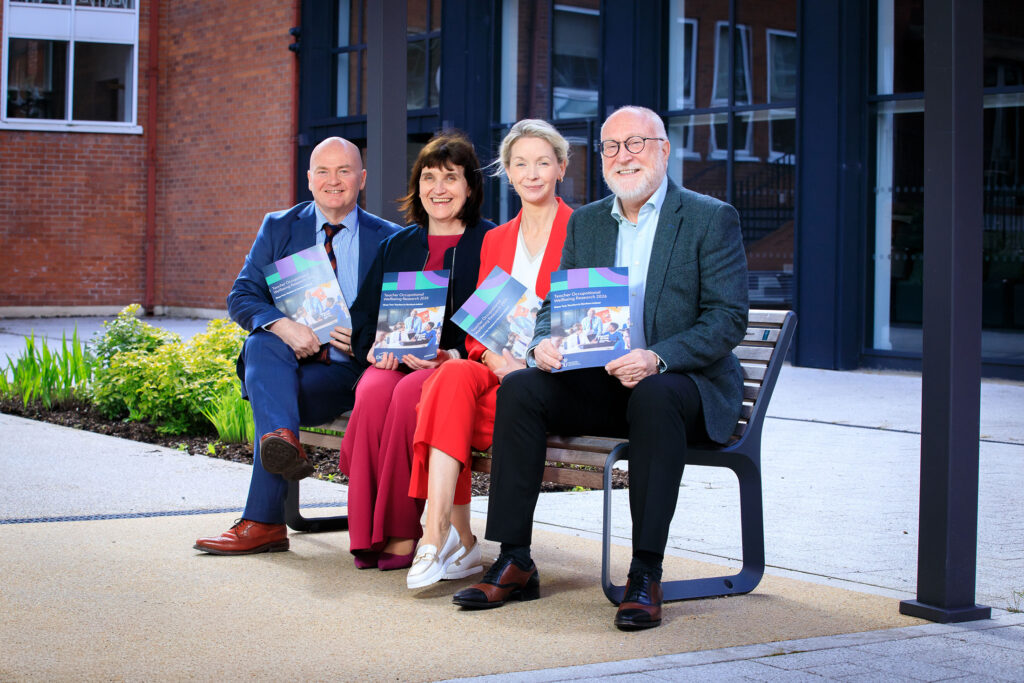
Pictured at the launch of the Teachers’ wellbeing research L to R – Paul Hazzard, Associate Lecturer St Mary’s University College, Professor Catherine Furlong, Dublin City University, Assistant Professor, Sabrina Fitzsimons, Dublin City University and Professor Peter Finn, College Principal St Mary’s University College.
Also read
International Summer School
Open Day Success
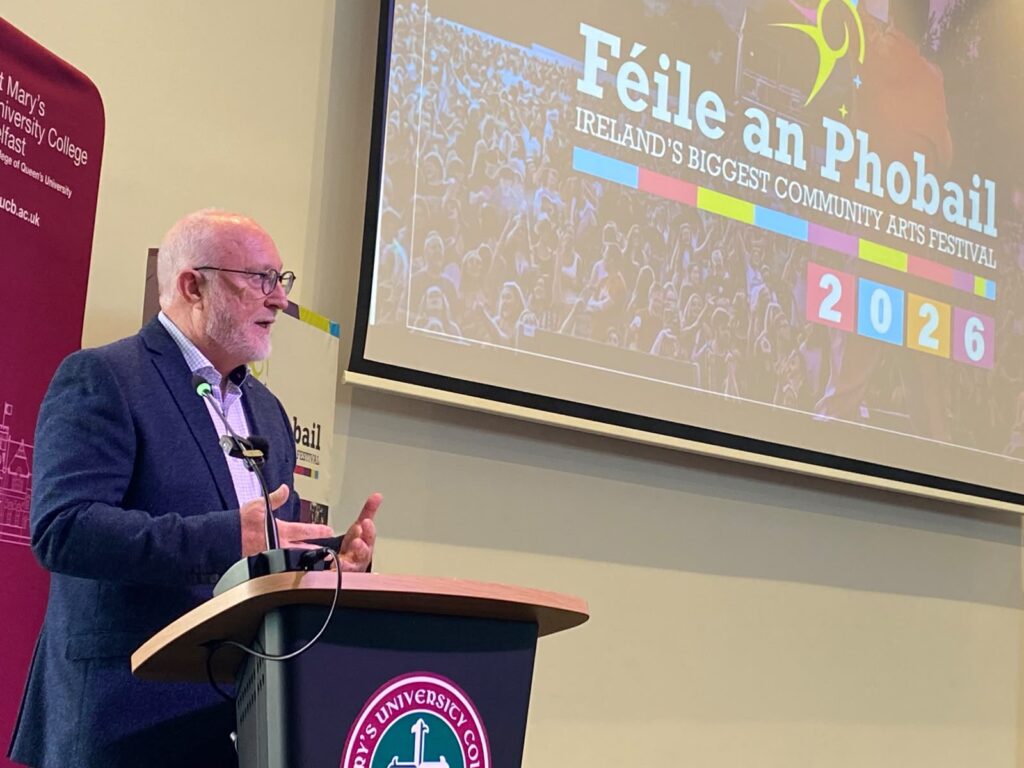
Féile 2026 Launch
St Mary’s, where learners become leaders
We work for the development of the whole person in preparation for a lifetime of learning and leadership.